Custom printing
Personalizing a 3D-printed sign: wording, layout and size
A personalized sign can be simple to describe—until you have to choose the exact wording, fit it into a space and decide what should stand out. A name, a small label and a table display each need a slightly different brief.
This guide helps you make those design decisions before requesting a custom piece from BerryBroCreations. Jon accepts personalization enquiries in Whitby, Ontario; the options, feasibility, price and timing are confirmed for each project. You do not need a finished design to start.
Start with the exact words, not just the idea
Write the wording as you want it to appear, including capitals, punctuation, accents and any second line. “MAYA”, “Maya” and “Maya’s Studio” describe different text, even when they refer to the same person. A reference photo can communicate the mood, but typed wording makes the request easier to check.
For several signs, provide a separate line for each one. Number the entries and say which wording belongs together. If two pieces need different names, identify that before the design is reviewed rather than relying on a note buried in a conversation.
Decide what someone should notice first
Choose the main message and separate it from supporting text. A name might be the focus, with a short description underneath. If every word is large and every element is decorative, there is less room for a clear focal point.
Use a simple sketch with boxes for the lines of text. Mark whether you prefer one line, stacked lines or a border, and identify anything that can change if space is tight. You are showing your preference, not committing to a layout that has not yet been checked.
Measure the display space before choosing a size
Measure the available width, height and depth, with units. There is a difference between the overall space you have and the finished sign size you are requesting. Tell Jon which you are providing, especially if the piece needs to sit between other objects or fit in a holder.
A paper rectangle is a useful planning aid: place it where the sign would go and consider how close people will be when reading it. It cannot prove that a design will print successfully, but it can help you spot a sign that would feel too large, too small or crowded. Final printable dimensions still need project-specific review.
Treat a font reference as a starting point
Send a reference for the lettering style you like, and say what matters about it: clean capitals, rounded letters, a handwritten feel or something else. Keep the intended reading distance in mind. A decorative flourish that looks clear in a large screenshot may not remain clear on a much smaller sign.
Pollen AM’s extrusion-printing design guidance explains why the thickness of letter strokes matters, not just the overall text height. Use that as a reason to discuss fine lettering rather than assuming a particular font will work at any size. Its process-specific dimensions are not BerryBroCreations specifications.
Raised lettering and recessed lettering are also different design treatments. Prusa’s text-tool documentation describes embossed text as added geometry and debossed text as subtracted geometry. Those are useful terms for describing a preference; they do not mean every treatment is available on every product here.
Describe how it will be displayed
Will the sign stand on a desk, sit in an existing holder or need another arrangement? Ask what support, base, fixing or other accessory is included rather than assuming one comes with a custom request. Include any holder dimensions or photos that affect the fit.
State the setting and your colour preferences, including which element you want to stand out. A catalogue photograph is not a promise of every colour combination, outdoor suitability or a particular material. Jon confirms what is appropriate and available for the project before the order is agreed.
A short design brief you can adapt
Here is a hypothetical request, not a past customer order: “I would like a small indoor desk sign reading ‘Maya’s Studio’, with that spelling and apostrophe. Please make ‘Maya’s’ the main line and ‘Studio’ smaller underneath. The space is 18 cm wide and 9 cm high; those are the space limits, not confirmed finished dimensions. I prefer simple lettering and would like to discuss suitable colours and how the sign would stand.”
The useful part is the distinction between fixed details and flexible ones. The wording is exact; the lettering, colours and support are still questions. The measurements describe a space to work within, not a guarantee that a particular specification can be made.
Check these details when the design is discussed
Keep one clear version of the request, and ask which details are included in the scope before proceeding. If a visual or written specification is shared during the discussion, check it against the same brief rather than approving from memory. This does not promise a particular proofing service or number of revisions.
- Exact spelling, punctuation, accents and capitalization.
- Which words share a line and which message is most prominent.
- Finished dimensions versus the available space, with units.
- Lettering style and any details that may need simplifying.
- Colour preferences, display arrangement and included accessories.
- Quantity, including whether each sign has different wording.
- Agreed scope, price and timing; pickup or shipping arrangements.
Sources & scope
- Pollen AM: Engraving Details
General extrusion-printing guidance on lettering and stroke thickness. Its equipment and numerical recommendations are not claims about BerryBroCreations capabilities.
- Prusa Knowledge Base: Text tool
Primary software documentation explaining text placement, fonts and embossed versus debossed geometry. It is terminology context, not a statement about Jon’s software or available processes.
- BerryBroCreations custom 3D printing and personalization
Confirmed service scope: customer model-file printing, new design enquiries and personalization, reviewed per project.
- BerryBroCreations Customizable Marker Signs
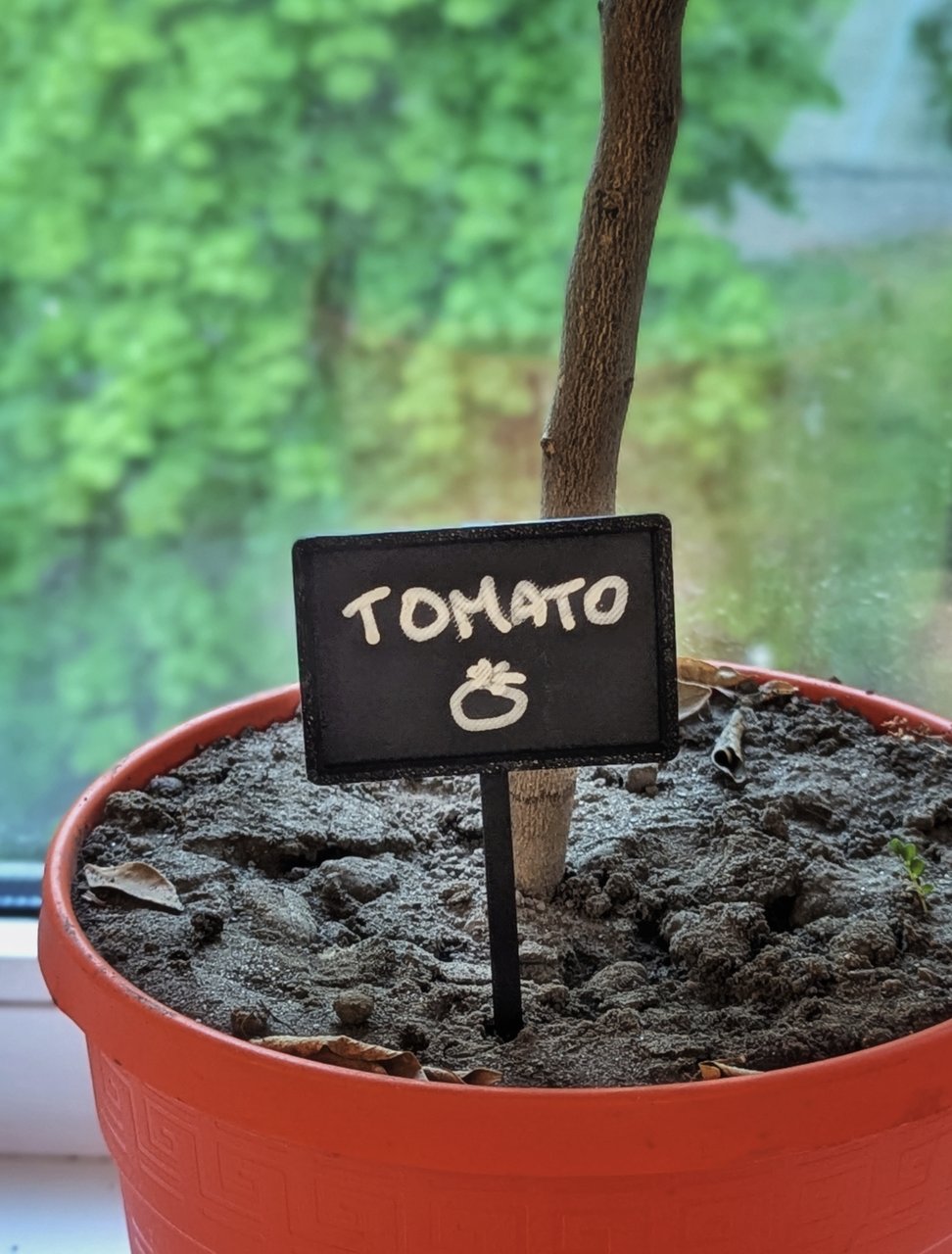
The current catalogue example used for the photograph. No unconfirmed measurements, colours, accessories or outdoor-use claims have been added.
Prepared with AI assistance using the primary sources and confirmed BerryBroCreations information linked above. Published with the owner’s approval on November 5, 2026. Examples are hypothetical, not customer stories or first-hand print tests. This is project-planning guidance, not a technical specification, fixed price or service guarantee; Jon reviews each customer project individually.
Your project, with clear next steps
Turn the reading into a useful brief.
Send Jon the idea, finished size, quantity and intended use. Feasibility, price and timing are confirmed before you commit.
Ask Jon about your personalized sign →